The post FB Live Stream Feb 2nd for #EDAW2018 appeared first on Define Me Wellness.
]]>Eating Disorders Awareness Week (EDAW) is upon us once again. EDAW is a Canadian event led by the National Eating Disorder Information Centre (NEDIC). And February 1st to 8th is an opportunity to highlight the problems with eating disorders.
I’m sad that:
- dieting, disordered eating and eating disorders are still a reality for many
- funding and approaches to ED treatment have not changed much
- many voices are not being validated or supported in the ED space
#7BillionSizes
This year NEDIC is using the hashtag #7BillionSizes to shed light on the fact that eating disorders do not discriminate. While at the same time, the systems that perpetuate them do. For example, here are a few misconceptions regarding eating disorders (ED) that you might be familiar with:
- they only happen in young white girls
- body size is a clear indication of ED symptoms
- anorexia and bulimia are the most common/serious ED types
My story held true to the first narrative. I was a young girl, thin and white. Therefore, I was recognized as someone who needed help. But that’s certainly not everyone’s story. Truth: eating disorders can affect anyone at any life stage, and of any gender, sexual orientation, size, race, religion, etc.
Various media/entertainment depictions of EDs, such as the more recent Netflix drama To The Bone, feed into the false belief that you have to be extremely thin in order to be sick. Truth: Body size is not indicative of mental illness. There is a range of eating disorder behaviours that do not always fall into a neat and prescriptive recovery box (side note: for more on why “To The Bone” is problematic, read this).
So, along with taking a hammer to our scale (as some of us do as part of our recovery), we should also be smashing the stereotypes regarding EDs so that all voices/experiences can be supported.
Facebook LIVE Stream
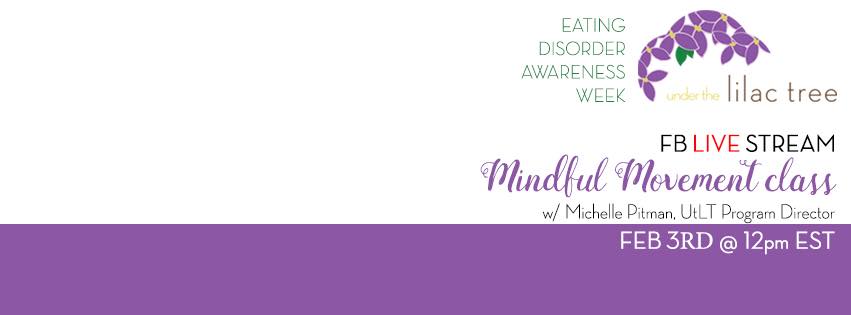
Just as I did for last year’s EDAW, I’ll be live streaming a gentle/restorative/mindful movement session, on our Define Me Facebook page. Please come join us and drown out the diet and body hatred noise, even if just for an hour. Here is what to do:
- Mark Feb 3rd @ Noon EST on your calendar
- Like our page
- Grab a quiet place in your home, plus 2-3 blankets and pillows
- Set “Do Not Disturb” on your device
- Give yourself permission to be at peace with your body
The post FB Live Stream Feb 2nd for #EDAW2018 appeared first on Define Me Wellness.
]]>The post The Body Acceptance Series Part III: Putting Theory Into Practice appeared first on Define Me Wellness.
]]>Over the last few blogs, I’ve introduced you to some concepts for eating disorder recovery and healing. These practices stem from:
- My personal experience
- The way I engage with clients
- And the presentation I gave this past May at the NEDIC conference: Moving Body Acceptance Off of the Mat and Into the World
 In Part I of this series, we talked about creating a space of safety for healing. And in Part II, we cultivated a heartfelt intention to keep us rooted in our journey. Finally, here in Part III, I will take you through a guided relaxation where we’ll combine all learnings from this 3-part Body Acceptance series.
Can Stillness Bring Change?
I firmly believe so. Prior to discovering the practice of Restorative Yoga and Yoga Nidra, I used to believe change came from constantly moving > striving > doing stuff. Even in my ED recovery I felt I needed to check off the “tick boxes” of the supposed steps in recovery. But now, I realize personal growth and change is not so linear. And lying dormant isn’t necessarily a bad thing. Sometimes the most profound changes come from being still and getting in touch with the deepest part of ourselves – very slowly and thoughtfully.
Enter: The Practice
“There is a part of you that is whole, healthy and not needing to be fixed.”
~ Richard Miller, psychologist and founder of iRest
I believe becoming more accepting of your body means practicing it, regularly. And I don’t want you to waste one more minute in theory! So I’m going to leave this 30-minute guided relaxation right here for you to explore, on your own time, in your own healing space.
Let us know how it goes! <3
The post The Body Acceptance Series Part III: Putting Theory Into Practice appeared first on Define Me Wellness.
]]>The post The Body Acceptance Series Part II: The WIIFM of Healing & Recovery appeared first on Define Me Wellness.
]]>WIIFM stands for “What’s In It For Me”. And it’s most notably referenced in the marketing and selling of a product or service. But in Part II of this Body Acceptance series (click here for Part I), I’m borrowing the WIIFM phrase to explore the deep-seeded reasons why someone seeks healing and recovery. I’m particularly drawing on my presentation last month at the NEDIC conference “Moving Body Acceptance Off Of The Mat & Into The World”.
WIIFM is a marketing approach to highlight the key selling features that will attract consumers to buy what a business is selling. It drives the promotion strategies used. And, if done well, continually focusing on the consumer benefits when advertising brings higher sales.
However, the “buying and selling” of eating disorder treatment is not easily strategized or packaged. Healing and recovery on this front is deeply personal, with umpteenth reasons for seeking it out. There is no cookie cutter approach. But, getting a clear understanding of the reasons why you are starting on the ED recovery path can:
- Help articulate your recovery goals and intentions going forward
- Be an anchor to what keeps you going, especially when the changes you’re making feel difficult
What am I longing for?
Selling anybody, on anything, is not the way I operate. The resolve to heal has to come personally from within. And no amount of persuasion or marketing tactics is going to sell you on the need/desire for healing.
Instead, when clients start working with us, the suggestion is that they ask themselves why they are here in this stage of their recovery journey. In other words, WIIFM is reframed with questions like these:
- Where does the eating disorder make life difficult/challenging?
- What are some negative feelings/experiences that the eating disorder creates?
- How are these behaviours not serving me at this time?
- When the eating disorder is no longer a guiding force in my life, what does that look like?
- Or… what am I longing for?
When participants and I pondered these questions at the NEDIC conference, there was a general consensus that life with an ED is anxiety-provoking, nerve-wrecking, surrounded by so much fear and a feeling of being overpowered by the ED thoughts/behaviours. But, on the other side of that, might be freedom, personal trust and inner peace. And remembering the personal intention (the longing) at the forefront of the recovery process, is one way to solidify one’s commitment to healing.
From “May I….” to “I am”
Practices such as meditation, reflection and journaling can be effective tools for disrupting the ED. Loving Kindness Meditation (LKM) is one type of attention that can guide us from a place of self-loathing to self-compassion. A LKM has the following recited phrases: “May I be safe; may I be healthy, may I be happy and may I live with ease.” Therefore, it is a hope for healing, recovery, change.
However, if we tap into our heart’s deepest desire and use the yogic practice of Sankalpa, change becomes more imminent.

Sankalpa is Sanskrit for heartfelt intention, a solemn vow, your heart’s deepest desire. It typically has the following characteristics:
- A personal commitment
- Affirming, positive
- Rooted in the present tense
In other words, your heartfelt intention is an anchor for where the recovery process will ultimately take you – realizing your true purpose in life.
Developing your Sankalpa (Heartfelt Intention)
- Have a pen and paper handy
- Find a quiet place for reflection
- Go back to the questions above in the What am I longing for? section.
- Pay particular attention to what it is your heart is longing for
- Keep your statement brief, something you can easily recall and recite to yourself often
- Write it down
- Close your eyes and repeat your Sankalpa to yourself several times
- Sit for a while and feel how this statement shows up in the body
Crafting your Heartfelt Intention can take some time. Also, it doesn’t have to be perfect. But if you’re struggling to find one that works for you, here are a few examples to get you started:
- I am…
- I welcome all impressions as interesting notes of discovery
- I trust myself
Up next: Michelle will guide you through a Yoga Nidra practice. Stay tuned for this 20 – 30 minute guided relaxation, where we’ll combine all learnings from this 3-part Body Acceptance series.
The post The Body Acceptance Series Part II: The WIIFM of Healing & Recovery appeared first on Define Me Wellness.
]]>The post The Body Acceptance Series Part I: Creating the Space for Body Acceptance appeared first on Define Me Wellness.
]]>May 11th, 2017 was a career highlight for me as I presented on this topic (image above) at the Body Image & Self Esteem Conference for the National Eating Disorder Information Centre! Such an important and thrilling (a little nerve-wrecking) task to take on but it was an opportunity I could not pass up.
The original presenter was unable to present on “Moving Body Acceptance Off Of The Mat And Into The World” so I was asked to facilitate it instead. A lofty goal, I think, to address all that is in that title, in only 75min. And so many directions the presentation could have taken! But I chose to:
- Draw on my lived experience
- Leverage my understanding on the concepts of neuroscience and embodiment
- And weave throughout some of my favourite embodiment tools (and there are many) in an effort to encourage self-discovery, healing and change
This 3-part series is to share that presentation (and possibly more) here, with you! I hope it will intrigue and inspire colleagues, clients/patients, caregivers and those in recovery in the complex field of Eating Disorders (EDs).
Let’s Explore, Question and Discover
In this 3-part series we will address, what I believe, are helpful components for recovery and healing:
- Designing a “mat” space as a personal labratory
- Asking the ultimate question: “What is it I and/or my client are longing for?
- Testing various tools/practices for engaging with the body in an embodied way
So let’s explore the first component that can be a starting off point in the journey…
Our “mat space” as our personal laboratory
EDs and body image disturbances are ailments that promote disconnection from the natural, integrated wisdom between the mind and body. In recovery, we are attempting to repair that separation. And yet connecting to the body experience again can be very scary. 
Neuroception: a term coined by Dr.Stephen Porges, describes neuroception as a wiring within our nervous system, interpreting the environments we’re in as places of safety or potential threat
If the intention is to gradually cultivate a sense of acceptance and connection for our bodies, then we need to feel safe to explore the body experience in a neutral way (I wrote more on body neutrality in this post).
One of the ways to create safety in ED recovery, is to begin with establishing boundaries for those explorations. The yoga mat can be a physical manifestation of that needed safe place. It can be a place to practice new concepts. And when we are on our mat space it is:
- A judgment-free zone, where you don’t have to “be” or “do” anything
- And you approach the body and your noticed responses with sincere curiosity. I like to use the phrase “Hmm, isn’t that interesting!” whenever something comes up for me
A Ceremony: Creating Your Mat Space
In my NEDIC presentation, participants didn’t have an actual mat. And you don’t need one either. But you can map your “mat space” as your personal laboratory wherever you feel is best to do so:
- A good place to create that space might be your bedroom
- Stand in whichever space you choose
- If you have a mat, roll it out in your chosen space. Or visualize a mat, in whatever shape and size feels necessary
- Close your eyes, with arms spread out wide, take up space. Pause
- Declare to yourself “This is my sanctuary. This is my anchor. This is my safe place”
- Consider slowly and deliberately doing a 360 degree turn of your mat space
- With arms stretched out as you turn, continue to repeat the above declaration
- Once your mat space feels firmly designed for your personal explorations and comfort, complete the ceremony
Coming Soon: Part II of this Body Acceptance series will explore the question: What is it that I and/or my client are longing for? Until then, return to this safely (mat practice), slowly, gently and repeatedly
The post The Body Acceptance Series Part I: Creating the Space for Body Acceptance appeared first on Define Me Wellness.
]]>The post Eating Disorder Ceasefire: How To Create a Safe Space Over the Holidays appeared first on Define Me Wellness.
]]>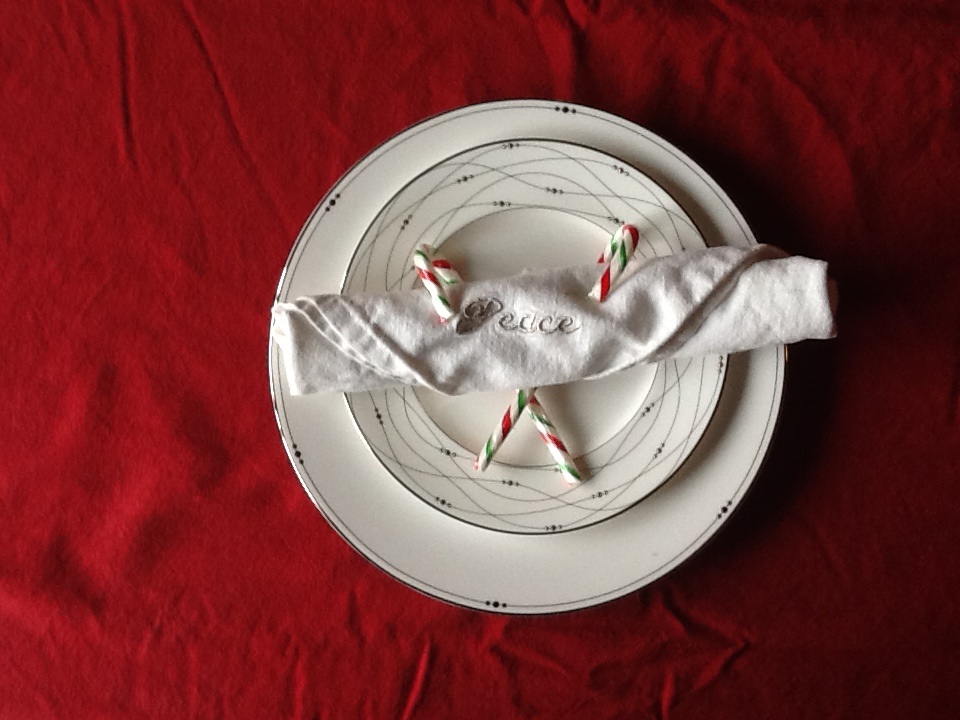 Providing a safe space at the dining table for someone suffering from an eating disorder (ED) is not easy. Holidays can create anxiety for many of us. We are all susceptible to food and body shame in the subtlest of messaging. But for those with an ED, comments about food, eating habits and bodies can set them back BIG TIME in their recovery. At the holiday table especially, establishing a ceasefire with the ED is Priority 1!
The Inspiration
A recent Buzzfeed article: What Not to Say About Food at Thanksgiving inspired me to create a resource – an invitation. The invitation letter is an example of what to send out when inviting folks to special occasions. The letter asks invitees to refrain from ED triggering language and subject matter.
Setting the tone for the celebration ahead of time will increase awareness and hopefully minimize any harmful comments or actions.
First, Some Considerations
This is for caregivers and loved ones of ED sufferers and survivors. Do the best you can to setup a safe space prior to the get-together. You want to avoid those potential triggers where the eating disorder thoughts and behaviours are provoked. Consider some of these ideas:
- Host the celebration. Be in charge of creating a neutral environment, where the eating disorder cannot thrive
- Ask your loved one with the ED what would make the celebration successful and maybe even enjoyable for them
- Avoid centering on any one individual or on the ED specifically
- Draft an invitation that is kind, yet firm, around the types of conversation that is off limits
The Invitation:
The following is the text in a JPEG format. I’ve also provided a link to the PDF version so you can copy-paste, then make changes as you see fit. Please email me if you are having trouble accessing it and I will email the text right over to you. 
Whatever you celebrate, I hope this invitation helps making a safe space over the holidays a little easier for you and your loved ones.
And here is another format: Holiday Invitation PDF
Define Me has a new offering for those struggling with eating disorders across the spectrum. Under the Lilac Tree is a virtual program with a team of peer support workers, dietitians, embodiment and gentle movement coaches. If you or a loved one are seeking help, please contact Michelle Pitman, program director via email: [email protected] or call: 905-441-1524.
The post Eating Disorder Ceasefire: How To Create a Safe Space Over the Holidays appeared first on Define Me Wellness.
]]>The post Are You Waiting for Eating Disorder Treatment? Feeling Lost and Alone? This might help… appeared first on Define Me Wellness.
]]>The Story Behind the Launch

I made my way down from the podium, onto the conference room floor, where audience members provided feedback on the presentation myself and colleague Kori Lichtfuss had just completed. The presentation included a brief intro into my eating disorder history and some thoughts on my recovery.
As I finished chatting with folks, a young woman who had been waiting in the background approached me, with tears in her eyes, and softly whispered:
“What did you do to not relapse?”
It was one of the most difficult questions I think I had ever been asked in my life and I was so unsure how to respond. I took a breath. I looked into her eyes. There was so much vulnerability for both of us in that moment and, standing on the other side of recovery, I had so much empathy for this women and all the pain and suffering the eating disorder had caused her.
She proceeded to tell me that she was in the middle of her 3rd relapse. She was trying the best she could, on her own, to manage her symptoms while she anxiously waited for space to open up for an inpatient treatment program. After providing her with some interim resources to search out, I asked permission to give her a hug and offered words of encouragement. But what I didn’t realize in that moment was a seed being planted.
That vulnerable exchange between survivor and fighter was 18 months ago at a National Eating Disorders Conference. Since then, I have found myself reflecting on it often and asking:
- Was there more that I could have done for her? AND
- How might I use my lived experience from ED diagnosis to recovery (and no relapse) to make a difference for those in it now?
Those questions have been at the centre of building a space for the ED community that is now ready to launch…
Welcome to Under The Lilac Tree
 The first of its kind, Under the Lilac Tree is an online resource for your road to recovery. You have already taken the first step by acknowledging the problem and seeking treatment. This program’s intent is to fully support you while you wait. We work together to reduce self-harming behaviours, managing the eating disorder before your admission to inpatient/outpatient treatment.
Under the Lilac Tree provides regular opportunities to check-in and explore opportunities for healing through:
- Creating small, yet meaningful goals
- Weekly coaching calls with a peer support worker (that’s me!)
- Weekly virtual sessions with a registered dietician
- Additional sessions and resources on restorative movement, mindfulness and self-care
- Ongoing support via email
Along with waiting for treatment, there might be additional barriers to accessing support on your ED recovery such as your location and financial resources. That is why Under the Lilac Tree coaching and counselling is:
- Offering services virtually via Skype, phone and/or email
- Affordable, with packages starting at $399 (sliding scale available for those who qualify)
- Flexible with options for spreading out sessions (i.e.: bi-weekly instead of weekly, or other suitable frequency)
So there it is! What started as a whisper of an underlying need, became a labour of love that is now available to you and your loved ones. If support in your ED healing journey is something you’re seeking, please reach out. I’m only a phone call or email away if you need me.
More to come in my next post where I’ll introduce you to our team and the core values that guide us in serving you as you move towards recovery.
The post Are You Waiting for Eating Disorder Treatment? Feeling Lost and Alone? This might help… appeared first on Define Me Wellness.
]]>