The post World Eating Disorders Action Day is Here! June 2nd, 2019 appeared first on Define Me Wellness.
]]>
June 2nd is World Eating Disorders Action Day. And I’ll be participating. I want to do my small part in getting the message out about the challenges that exist in getting appropriate care and treatment for eating disorders. Because it is not easy for those suffering from this life-threatening mental illness to:
- Have their symptoms and concerns be taken seriously
- Get a proper and quick diagnosis
- Access treatment and recovery support
World Eating Disorder Action Day launched in 2015 by a group of activists, professionals, caregivers, and survivors across the globe. You can learn more about their mission and vision here, as well as how you can participate on June 2nd.
We do act NOW
Activism efforts are helpful in mobilizing change in the field of eating disorder treatment and prevention. But it doesn’t have to be grandiose or exhaustive. In other words, your championing for change can involve actions that are big or small. Further, your efforts can be time extensive or time-limited. And you can:
- Offer your special talents to eating disorder spaces (i.e.: volunteer)
- Educate yourself
- Campaign for increased government funding
- Educate others
- Spend time with a person struggling with an eating disorder or their caregiver. Listen without judgment. Ask them what they need. And do your best to support them.
You can act now by joining the conversation online. Follow us on Instagram @utlilactree. And engage with the content being shared on June 2nd (on ours and other platforms). Additionally, search on the following hashtags to stay in the know: #showusyourpurple, #eatingdisorderscantaffordtowait, #wedoactnow.
Finally, there will be at least 7 posts on our Under the Lilac Tree Insta profile on June 2nd. Moreover, these posts will pose certain reflective questions related to how we can instigate change in the eating disorder field. And I would love to hear from you! Like, comment, and repost on World Eating Disorder Day posts to keep the conversation going. Let’s bring together as many voices as possible on June 2nd to brainstorm ideas for advocacy and change. See you there
The post World Eating Disorders Action Day is Here! June 2nd, 2019 appeared first on Define Me Wellness.
]]>The post FB Live Stream Feb 2nd for #EDAW2018 appeared first on Define Me Wellness.
]]>Eating Disorders Awareness Week (EDAW) is upon us once again. EDAW is a Canadian event led by the National Eating Disorder Information Centre (NEDIC). And February 1st to 8th is an opportunity to highlight the problems with eating disorders.
I’m sad that:
- dieting, disordered eating and eating disorders are still a reality for many
- funding and approaches to ED treatment have not changed much
- many voices are not being validated or supported in the ED space
#7BillionSizes
This year NEDIC is using the hashtag #7BillionSizes to shed light on the fact that eating disorders do not discriminate. While at the same time, the systems that perpetuate them do. For example, here are a few misconceptions regarding eating disorders (ED) that you might be familiar with:
- they only happen in young white girls
- body size is a clear indication of ED symptoms
- anorexia and bulimia are the most common/serious ED types
My story held true to the first narrative. I was a young girl, thin and white. Therefore, I was recognized as someone who needed help. But that’s certainly not everyone’s story. Truth: eating disorders can affect anyone at any life stage, and of any gender, sexual orientation, size, race, religion, etc.
Various media/entertainment depictions of EDs, such as the more recent Netflix drama To The Bone, feed into the false belief that you have to be extremely thin in order to be sick. Truth: Body size is not indicative of mental illness. There is a range of eating disorder behaviours that do not always fall into a neat and prescriptive recovery box (side note: for more on why “To The Bone” is problematic, read this).
So, along with taking a hammer to our scale (as some of us do as part of our recovery), we should also be smashing the stereotypes regarding EDs so that all voices/experiences can be supported.
Facebook LIVE Stream

Just as I did for last year’s EDAW, I’ll be live streaming a gentle/restorative/mindful movement session, on our Define Me Facebook page. Please come join us and drown out the diet and body hatred noise, even if just for an hour. Here is what to do:
- Mark Feb 3rd @ Noon EST on your calendar
- Like our page
- Grab a quiet place in your home, plus 2-3 blankets and pillows
- Set “Do Not Disturb” on your device
- Give yourself permission to be at peace with your body
The post FB Live Stream Feb 2nd for #EDAW2018 appeared first on Define Me Wellness.
]]>The post #EDAW2017: A Restorative Practice to Help Your Loved One Manage Anxiety appeared first on Define Me Wellness.
]]> A common dilemma with eating disorders (EDs) is the difficulty one can have in identifying and interpreting their emotions (the medical term for this is alexithymia). Again, it comes back to the mind-body disconnection that I spoke about in yesterday’s post.
Anxiety is also a common c0-occuring illness with EDs. It puts the nervous system into an “amped-up” state! When someone is experiencing anxiousness, it can feel debilitating and overwhelming. And not being able to tap into and know those feelings can be confusing, making it hard to figure out what is needed to self-soothe and self-regulate those feelings. So what is someone with and eating disorder to do when experience anxiety and/or a nervous system on overdrive? It’s in these situations leaning on a loved one might be helpful.
The role of caregiver
As a caregiver of someone struggling with an eating disorder or other mental health illness, it can be challenging to know what to do. But don’t minimize your role as supporter and nurturer. Sometimes the best thing you can offer is a safe place to be held and an opportunity for rest, without try to fix anything.
Are you familiar with the practice of swaddling? Swaddling is often part of the bedtime routine for infants. It is where a newborn is cocooned in a blanket. And it signals to  the nervous system that it is time for rest.
Now I’ve been experimenting recently with using this practice for managing difficult feelings, especially for anxiety. And if you want to do something for your loved one in need of some down-regulating, you may want to try this…
Swaddling: It’s not just for babies
In the following video, I demonstrate with my friend Angela, how to swaddle and nurture an adult. But first, here are some suggested tips:
- Take up space, as much as you need. I use my living room and push any furniture aside
- Turn off phones and remove any other potential distractions (TV, pets, etc.)
- Adjust lighting if possible (or use an eye pillow or folded hand towel placed over the eyes to shield from bright lights/the sun)
- Explain what you will be doing, ask permission and stay with them the entire time
- Allow some time for quiet but continue to ask them every few minutes how they are doing
- Continue to remind them that you are there, either with a few kind words or hands gently placed at top of head, shoulder or feet
- Keep with the swaddle 5 – 15 minutes max. Any longer than that has the potential to bring up feelings of overwhelm and claustrophobia (which is the opposite of what you are trying to accomplish)
While I and some of my clients have found this to be super relaxing and soothing… what works for some, might not work for others. We are all unique in our recovery journey. But if you think it might work for you, give it a try and let me know what you think.
 Michelle Pitman is the founder and operator of Define Me Wellness. Most recently, Michelle has launched Under the Lilac Tree: a virtual program for eating disorder recovery and support. Click here to learn more about Michelle and her work.
The post #EDAW2017: A Restorative Practice to Help Your Loved One Manage Anxiety appeared first on Define Me Wellness.
]]>The post #EDAW2017: From Disconnection to Awareness with Self Massage appeared first on Define Me Wellness.
]]>Eating disorders are often coping strategies to manage difficult feelings and/or experiences. And behaviours such as starving, purging and self-criticism can trick us into thinking we are in control. But, when someone is in the depths of an eating disorder, the connection between the mind and the body is muddled.
It can be scary to give up the ED behaviours (believe me, I know). It is especially difficult when we don’t have positive replacements for those harmful behaviours. So, what do we need to repair the mind-body connection and heal from EDs? Well, I believe self-awareness is a super important skill. And my favourite way to rebuild self-awareness is through a variety of slow, gentle movement and self-care practices .
Self-Massage for The Win!
Self massage is just one of the strategies I incorporate into my self-care and movement tool kit. My morning practice includes at least 5 minutes of self massage with therapy balls. I roll with them everyday.
The following video is a brief demo of a typical routine I use for the neck-jaw-face. I use Yoga Tune Up® therapy balls (the “Originals”). But you could also use lacrosse or tennis balls instead to get a similar effect. Practice along with me:
Facebook Live: Restorative Movement Class!
As Eating Disorders Awareness Week comes to a close, I’ll be hosting a Facebook Live class on Tuesday, February 7th. Explore restorative movement and gentle embodiment practices in the comfort of your home. Checkout the Define Me Wellness FB page for further details.
 Michelle Pitman is the founder and operator of Define Me Wellness. Most recently, Michelle has launched Under the Lilac Tree: a virtual program for eating disorder recovery and support. Click here to learn more about Michelle and her work.
The post #EDAW2017: From Disconnection to Awareness with Self Massage appeared first on Define Me Wellness.
]]>The post #EDAW2017: Can Reiki Help with Eating Disorders? appeared first on Define Me Wellness.
]]>
The question of whether Reiki can help with eating disorders is one I have been recently asking myself. In fact, I have been thinking about Reiki’s place in ED treatment since launching my virtual recovery support program. Reiki is not usually part of everyday conversation. Furthermore, it’s not on the top of the list of treatment options where health care is concerned. Mainstream skepticism is strong when it comes to energy healing practices. Why? Because the healing possibilities of Reiki (or other energy healing options) are difficult to quantify. And the skeptics are likely to describe Reiki as “woo-woo” and needing proof of effectiveness before considering its place in treatment.
What is Reiki?
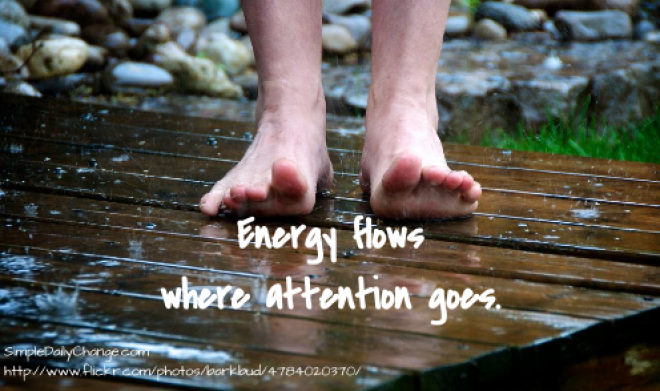
Reiki is a gentle energy healing practice with the intention of bringing balance to your mind-body. I like to use this quote to describe Reiki’s purpose:
“Energy flows where attention goes.”
As your practitioner, I am a conduit of energy for you, the client. I don’t have magical powers and I can’t foresee or promise a certain outcome. Instead, we both try to suspend judgment and trust in the idea of life happening for us (as opposed to life happening to us).
Energy healing sessions are held either remotely (aka: distance healing) or in-person.
- An in-person session involves the client lying on a massage table, fully clothed. Th
 en, the practitioner places hands directly on or hovering over different points of the body
 - A distance healing session does not require the receiver (client) to be present. Usually a picture, object or specific details (i.e.: name, age, issue/concern) about the individual are provided. And the practitioner focuses on the client details while sending them Reiki energy
So, is there a place for Reiki in ED Treatment?
The journey of healing and recovery is unique. And what is helpful for some, might not be as helpful for others. Let’s take a look first at what clients of mine have said about their Reiki sessions:
- Improved inner body awareness
- A sense of being grounded
- More feelings of being calm, at peace
- Less feelings of overwhelm/depression/anxiety
Now let’s look at some of the typical experiences of those struggling with EDs:
- Disconnection from the body? Yes
- A sense of being out of control? Yes
- Being at war with the body? Yes
- Feelings of overwhelm/fear/anger/anxiety/sadness/hatred? Yes
There does seem to be some parallels between the benefits of Reiki and what a person with an eating disorder needs to support recovery. While Reiki alone won’t completely heal the mind-body divide that an eating disorder magnifies, I believe it can be a nice compliment to traditional ED treatment. At the very least, it certainly couldn’t hurt to try.
Offering Free Reiki!
Finally, in honour of Eating Disorders Awareness Week, I’m offering free distance healing from Feb 1st – Feb 8th, 2017. Also, if you are local to the GTA or Durham Region, an in-person session may be scheduled on a Pay What Feels Best basis. Contact us to book your appointment.
Michelle Pitman is the founder and operator of Define Me Wellness. Most recently, Michelle has launched Under the Lilac Tree: a virtual program for eating disorder recovery and support. Click here to learn more about Michelle and her work.
The post #EDAW2017: Can Reiki Help with Eating Disorders? appeared first on Define Me Wellness.
]]>The post Under the Lilac Tree Kick Off for #EDAW2017 appeared first on Define Me Wellness.
]]>Eating Disorders Awareness Week (EDAW) starts NOW! Welcome. And thanks for joining me. At this time of year, there is always something I am doing to honour and raise awareness around eating disorders (EDs). Writing tends to be a form of processing and healing for me. And a means of support and encouragement for others (I hope). Whether it’s sharing my own struggle (like this post)… or my journey towards recovery (like in this post)… the intention is always to be real with my experience so that I might:
- Open a door to understanding for those who misunderstand EDs
- Or provide a glimmer of hope for healing for those who are working towards ED recovery
But my involvement in EDAW this year is much more! Without further ado, it starts with this kick off video. Watch to learn more about what I have planned:
The post Under the Lilac Tree Kick Off for #EDAW2017 appeared first on Define Me Wellness.
]]>The post Eating Disorder Ceasefire: How To Create a Safe Space Over the Holidays appeared first on Define Me Wellness.
]]>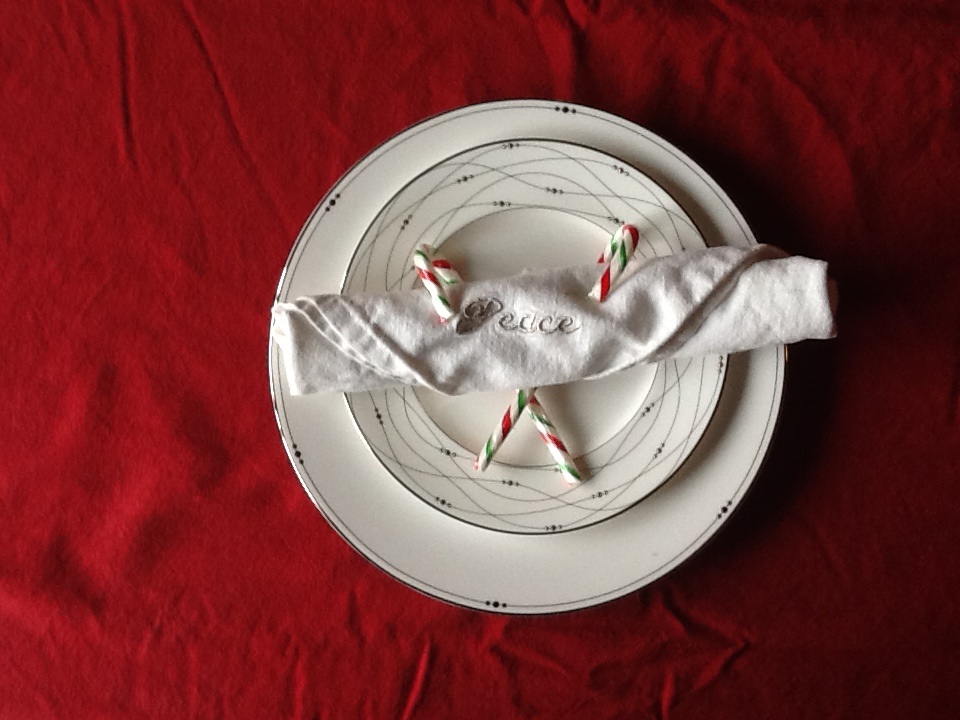 Providing a safe space at the dining table for someone suffering from an eating disorder (ED) is not easy. Holidays can create anxiety for many of us. We are all susceptible to food and body shame in the subtlest of messaging. But for those with an ED, comments about food, eating habits and bodies can set them back BIG TIME in their recovery. At the holiday table especially, establishing a ceasefire with the ED is Priority 1!
The Inspiration
A recent Buzzfeed article: What Not to Say About Food at Thanksgiving inspired me to create a resource – an invitation. The invitation letter is an example of what to send out when inviting folks to special occasions. The letter asks invitees to refrain from ED triggering language and subject matter.
Setting the tone for the celebration ahead of time will increase awareness and hopefully minimize any harmful comments or actions.
First, Some Considerations
This is for caregivers and loved ones of ED sufferers and survivors. Do the best you can to setup a safe space prior to the get-together. You want to avoid those potential triggers where the eating disorder thoughts and behaviours are provoked. Consider some of these ideas:
- Host the celebration. Be in charge of creating a neutral environment, where the eating disorder cannot thrive
- Ask your loved one with the ED what would make the celebration successful and maybe even enjoyable for them
- Avoid centering on any one individual or on the ED specifically
- Draft an invitation that is kind, yet firm, around the types of conversation that is off limits
The Invitation:
The following is the text in a JPEG format. I’ve also provided a link to the PDF version so you can copy-paste, then make changes as you see fit. Please email me if you are having trouble accessing it and I will email the text right over to you. 
Whatever you celebrate, I hope this invitation helps making a safe space over the holidays a little easier for you and your loved ones.
And here is another format: Holiday Invitation PDF
Define Me has a new offering for those struggling with eating disorders across the spectrum. Under the Lilac Tree is a virtual program with a team of peer support workers, dietitians, embodiment and gentle movement coaches. If you or a loved one are seeking help, please contact Michelle Pitman, program director via email: [email protected] or call: 905-441-1524.
The post Eating Disorder Ceasefire: How To Create a Safe Space Over the Holidays appeared first on Define Me Wellness.
]]>